BAND is building the interaction infrastructure for enterprise AI agents. As organizations move from isolated agent pilots to production environments running dozens of agents across teams, frameworks, and clouds, they are discovering the same structural gap: the infrastructure that lets agents actually work together does not exist. Microservices got service mesh. APIs got gateways. AI agents, so far, have had neither. The consequences are predictable in hindsight. Agents built in LangGraph, CrewAI, Claude, Parlant, Letta, and custom frameworks each handle delegation differently. Context is lost at every boundary. Authority is assumed but never verified. Glue code that works for three agents in a single process collapses at thirty across teams and clouds.
BAND replaces that brittle point-to-point wiring with a two-layer architecture: a collaboration mesh where any agent can discover, delegate to, and exchange context with any other, and a control plane where organizations enforce authority boundaries, govern interactions, and maintain full auditability. The platform is framework-agnostic and cloud-agnostic, which is not a stylistic choice but a structural requirement. No single vendor is going to control the agent landscape, and infrastructure built for one framework is infrastructure that will not hold.
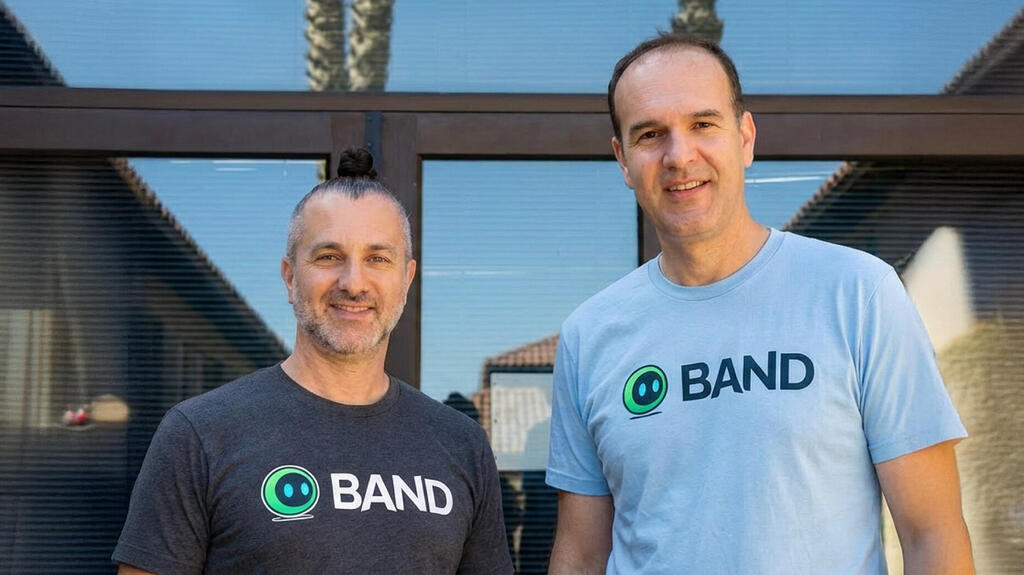
The company was founded by Arick Goomanovsky (CEO) and Vlad Luzin (CTO), a team combining deep backgrounds in enterprise security, distributed systems, and multi-agent infrastructure. Arick is a serial infrastructure entrepreneur (Sygnia, Ermetic), and Vlad has spent his career on the harder problems in multi-agent systems. Their thesis is simple and consequential: communication is the most fundamental problem in computing, and as a new class of participant enters the enterprise, the first thing it needs is a reliable way to find other participants, coordinate with them, and operate under shared rules. BAND is building toward a future in which agents and humans collaborate the way communities do, through shared language, agreed-upon rules, and continuous interaction, with technology setting the floor and policy, authority, and guardrails defining what is allowed.