Fundamental is building a foundation model for the kind of data that runs enterprises: the tables. Large language models have reshaped how teams work with unstructured data like text, audio, video, and code, but they have struggled with the structured data that sits at the core of every Fortune 500 business. Transformer-based architectures are fundamentally constrained by their context window, which makes reasoning over spreadsheets with billions of rows impractical. Fundamental's answer is Nexus, a Large Tabular Model (LTM) rather than a Large Language Model. Nexus is deterministic, returning the same answer to the same question every time, and it does not rely on the transformer architecture that underpins most contemporary AI labs. It goes through the standard pre-training and fine-tuning steps, but the result is a model purpose-built for the scale and structure of enterprise data, replacing what today requires entire teams of data scientists stitching together bespoke pipelines and predictive models.
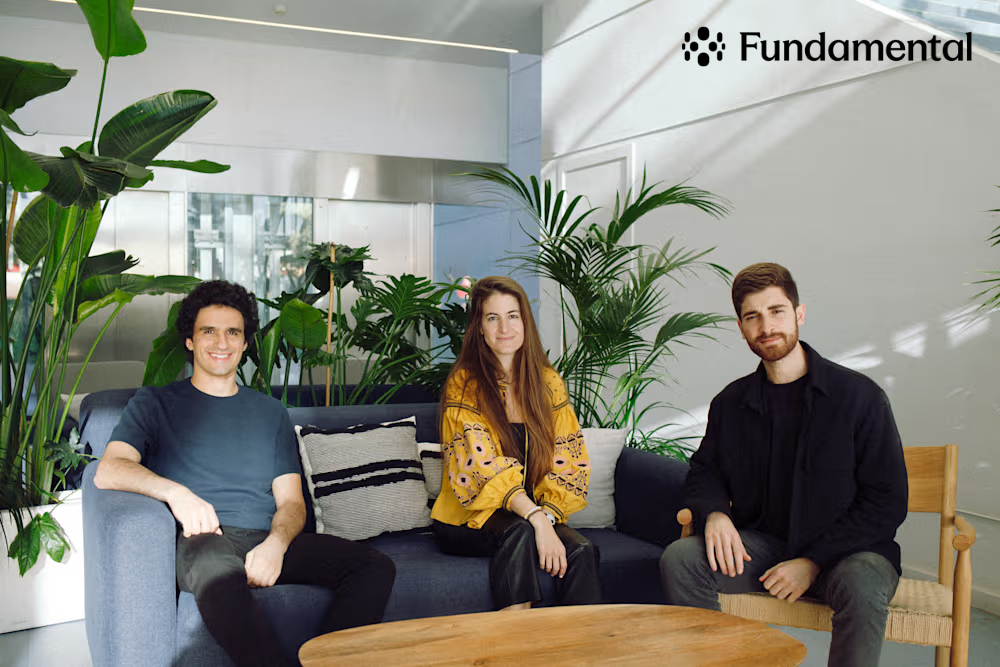
The opportunity is broad by design. A single foundation model across tabular use cases means an enterprise can expand the number of problems it tackles with AI, rather than building a new system for each one. Early traction suggests the thesis is landing: Fundamental has signed seven-figure contracts with Fortune 100 clients and entered into a strategic partnership with AWS, allowing AWS customers to deploy Nexus directly from their existing instances. The company is led by CEO Jeremy Fraenkel, and is building the engineering and research team out of an AI lab focused squarely on structured data as a first-class domain.